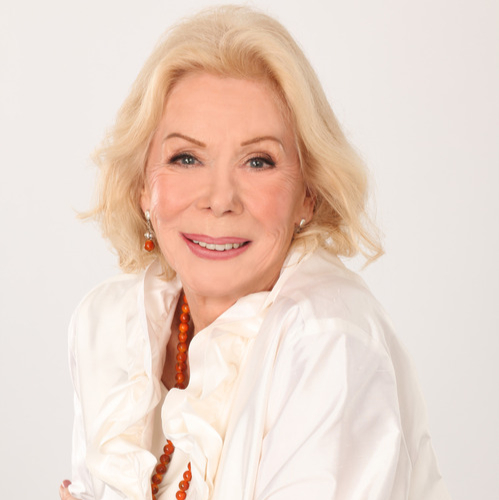
Full Legal Name: Helen Vera Lunney
Date of Death: August 30, 2017
Place of Death: San Diego, California, USA
Age at Death: 90 years old
Nationality: American
Ethnicity: Caucasian (English and possibly European descent via parents)
Louise Hay’s legacy encompasses four interconnected dimensions: personal transformation, spiritual teaching, literary impact, and business innovation.
Personal Transformation: Overcoming severe childhood trauma, including poverty, abuse by her stepfather, rape at age five, and forced adoption of her daughter at sixteen, Hay rebuilt her life through self-discovery. After marriage to English businessman Andrew Hay deteriorated in 1968, she encountered the Church of Religious Science at age 42, discovering that changing one’s thoughts could alter one’s reality. In the late 1970s, when diagnosed with cervical cancer, she rejected surgery and pharmaceuticals, instead designing a holistic program combining affirmations, visualization, nutritional cleansing, and psychotherapy. Within six months, she was completely healed, validating her philosophy that consciousness shapes physiology.
Spiritual Teaching & Methodology: Hay synthesized Religious Science founder Ernest Holmes’ Science of Mind philosophy with positive psychology and neuroscience-aligned affirmations. Her core teaching rests on three pillars:
(1) thoughts and beliefs create experiences;
(2) self-love is the foundation of all healing;
(3) individuals possess innate power to transform through conscious choice.
Unlike superficial “positive thinking,” her affirmations framework is grounded in cognitive-behavioral theory and neuroplasticity; the brain’s capacity to rewire itself through repetition.
Literary Impact: Heal Your Body (1976, self-published) predated the mind-body connection movement by decades. You Can Heal Your Life (1984) became a cultural phenomenon; remaining on the New York Times bestseller list for 13 consecutive weeks and selling 50+ million copies worldwide. Remarkably, 20 years after its initial release, the book re-entered the NYT bestseller list following Oprah Winfrey’s endorsement, marking the first time in publishing history a book achieved this distinction. Over 30 books followed, translated into 25+ languages.
Business & Social Innovation: Hay House, founded in 1984 as a venture from her living room, evolved into a $100M+ annual revenue enterprise operating across 35+ countries. The company publishes 1,500+ books and 1,300+ audio programs by 1,000+ authors, democratizing access to transformational content for marginalized voices. In 1985, Hay founded “The Hayride,” a support group for AIDS patients that grew from 6 men to 800 weekly attendees; predating mainstream HIV/AIDS activism and red ribbon symbolism. She established the Hay Foundation (1986) to support food, shelter, hospice, and counseling for those with AIDS and other crises.
Full Legal Name: Helen Vera Lunney
Date of Death: August 30, 2017
Place of Death: San Diego, California, USA
Age at Death: 90 years old
Nationality: American
Ethnicity: Caucasian (English and possibly European descent via parents)
Mother: Veronica Chwala Lunney Wanzenreid – Early childhood through adulthood; complicated, trauma-marked relationship
Stepfather: Ernest Carl Wanzenreid – Perpetrator of childhood abuse and trauma; deeply formative negative influence
Biological Father: Henry John Lunney – Limited documented relationship; largely absent from formative years
Daughter: Name not publicly disclosed – Forced adoption at age 16 due to pregnancy; lifelong source of emotional processing reflected in her work
Ex-Husband: Andrew Hay (English businessman) – Married in 1954; separated/divorced in 1968 after a 14-year marriage
Children with Andrew Hay: None – No biological or documented stepchildren
Subsequent Relationships: No remarriage documented after the 1968 divorce; focused professional life on ministry and healing work
| Level | Institution | Location | Years | Details |
|---|---|---|---|---|
| High School | University High School | Los Angeles, CA | ~1940-1941 | Dropped out at age 15 without a diploma due to abusive family circumstances |
| Adult Education – Spiritual | Church of Religious Science (Science of Mind classes) | New York City, NY | 1970-1976 | Intensive study of metaphysical philosophy; later ordained as a Religious Science Minister (1981) |
| Meditation Training | Maharishi International University | Fairfield, Iowa | Early 1970s | Trained in Transcendental Meditation under Maharishi Mahesh Yogi |
| Self-Directed Learning | Personal study of metaphysical authors | New York & California | 1970s+ | Studied Ernest Holmes and Florence Scovel Shinn; integrated New Thought and metaphysical philosophy through independent reading and practice |
Educational Philosophy:
Unlike traditional academic paths, Hay’s education was experiential and introspective. Her learning emerged through trauma processing, spiritual mentorship, meditation practice, and extensive study of metaphysical texts. This non-traditional background became a strength, allowing her to teach spiritual principles in clear, accessible language.
Religious Science Ordination (1981):
Formalized her ministerial credentials and enabled her to counsel and teach with recognized legitimacy within spiritual communities.
Career Analysis: This phase represented escape from poverty and trauma but lacked deeper purpose. External success created psychological complacency, reinforcing her later teaching that material achievement without inner alignment leads to suffering.
Career Analysis: This was the pivotal transition from external success to internal purpose. Healing herself validated her teachings and gave them urgency. The long incubation period reflected disciplined development rather than a pursuit of fame.
Career Analysis: This phase transformed her from individual author to institutional leader. By amplifying other voices, she multiplied her impact. Mission-first values attracted both authors and readers, creating sustainable growth.
Career Analysis: Mainstream recognition came through consistency rather than trend-chasing. Strategic use of media expanded reach without diluting message, validating decades of advocacy for healing and self-worth.
Career Analysis: Her final phase demonstrated adaptability and lifelong purpose. Continued innovation into her 80s and 90s modeled her core philosophy, that growth and contribution do not end with age.
Definition: Structured, emotionally charged positive statements repeated daily to reprogram subconscious beliefs and create new neural pathways.
Hay’s innovation:
Key techniques:
Example affirmations:
Influence: Became foundational to self-help, addiction recovery, CBT-aligned therapy, and mindfulness-based clinical practices.
Core belief: Physical illness reflects unresolved emotional
patterns and negative thought structures.
Framework:
Influence: Helped shape holistic health, integrative medicine, and wellness industries worldwide.
Method: Re-parenting the wounded inner child with compassion, safety, and unconditional acceptance.
Clinical relevance: Aligns with trauma-informed therapy,
attachment theory, and Internal Family Systems (IFS).
Central philosophy: Self-love is the foundation for healing, transformation, and healthy relationships.
Intellectual lineage:
Contribution: Translated abstract metaphysics into practical, accessible language without dogma, opening spirituality to secular audiences.
The Hayride (1985): Early support group for people with AIDS during widespread stigma.
Impact: Predated mainstream AIDS activism and established Hay House as a values-driven, inclusive organization.
Business innovation:
Notable authors developed:
Industry impact: Helped create the modern self-help category as a major bookstore and publishing segment.
Application: Used affirmations and self-love as complements to 12-step recovery.
Example affirmation:
“I am willing to release the need for this addiction. I deeply and completely love and accept myself. I am in the process of positive change.”
Career span: 1970–2017 (47 years)
Formats:
Speaking style: Warm, compassionate, non-judgmental; combined personal vulnerability, spiritual authority, humor, and storytelling.
Presented to Louise Hay by California First Lady Maria Shriver at The Women’s Conference in Long Beach, California, honoring women who are “extraordinary leaders, role models and visionaries” working on the frontlines of humanity to make the world more compassionate, tolerant and just.
You Can Heal Your Life entered The New York Times Best Seller list after Louise Hay appeared on The Oprah Winfrey Show and Donahue in the same week, cementing her status as one of the best‑selling self‑help authors in history and driving major growth for her company, Hay House Inc.
Roughly 20 years after its initial success, You Can Heal Your Life again appeared on The New York Times Best Seller list after renewed exposure and ongoing word‑of‑mouth, a rare feat that reflects the book’s enduring influence in the self‑help category.
Recognized by major publishers such as Penguin Random House and others as an international sensation that has sold over 35–50+ million copies worldwide in 30+ languages, making Louise Hay one of the best‑selling non‑fiction and self‑help authors globally.
The book You Can Heal Your Life was selected for inclusion in 50 Self‑Help Classics, a curated compendium highlighting the most significant works in the self‑help field, positioning Louise Hay alongside the most influential authors in the genre.
Featured in a New York Times Magazine article titled “The Queen of the New Age,” which profiled her life, philosophy, and the rise of Hay House, effectively acknowledging her as a central figure in the modern New Age and self‑help movements.
Australian media described Louise Hay as “the closest thing to a living saint,” a widely quoted phrase used in her official biography to reflect how audiences and press perceived her humanitarian work and spiritual impact.
Pioneering New Thought author and speaker (1926–2017), founder of Hay House, famous for linking positive affirmations to self-healing and personal transformation.
Her bestseller teaches that thoughts create reality; use affirmations to heal emotional patterns causing physical illnesses.
Positive statements reprogram subconscious beliefs, replacing negativity to manifest health, love, and prosperity.
Mental and emotional patterns like resentment, fear, or self-hatred; each ailment links to specific unresolved feelings.
She associated it with deep resentment; healing starts with forgiveness and affirmations, though not a medical substitute.
Examples: “I love and approve of myself,” “I am safe,” “Life supports me”, repeat daily for mindset shifts.
Through affirmations, therapy, nutrition, and releasing childhood resentment after a cancer diagnosis in the 1970s.
Publishing company she founded in 1984, now a self-help empire promoting authors on affirmations and spirituality.
Yes: Feel deserving of abundance; love yourself first to attract healthy partnerships via self-approval.
Her reference links ailments (e.g., acne: self-dislike) to causes and affirmations; available on her site and books.
An Indian politician, Rahul Gandhi is a prominent figure in the Indian National Congress, known for his parliamentary tenure, leadership roles, and advocacy for social justice and economic equity.
Indian Prime Minister since 2014, a prominent leader of the Bharatiya Janata Party. Former Gujarat Chief Minister, known for economic reforms and nationalistic governance strategies.
A leading voice in personal development and success, renowned for 'The Compound Effect' and his transformative work with 'Success Magazine'.
Spiritual teacher, author, and television personality dedicated to empowering individuals through self-mastery and holistic healing.