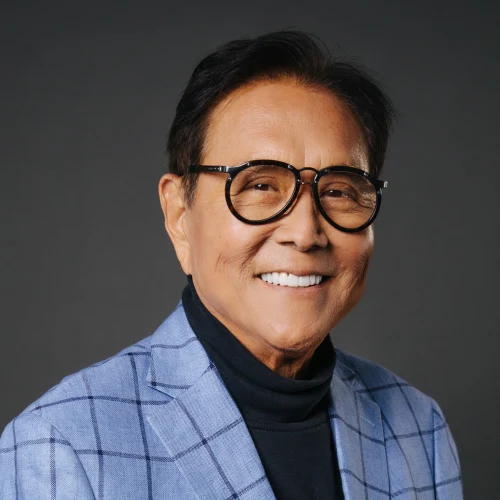

Robert Kiyosaki

Also known as: Robert Toru Kiyosaki

An American businessman, investor, and author, best known for his Rich Dad Poor Dad series of personal finance books.

Robert Kiyosaki is an influential American entrepreneur, investor, and author, primarily known for his groundbreaking Rich Dad Poor Dad book series. Born in Hawaii, Kiyosaki’s financial philosophy was heavily shaped by his experiences with two distinct father figures: his highly educated ‘Poor Dad’ (his biological father) and his less educated but financially astute ‘Rich Dad’ (the father of his best friend). This contrast formed the foundation of his unique approach to money management and wealth building.

Kiyosaki advocates vigorously for financial literacy, asserting that traditional education often fails to prepare individuals for real-world financial challenges. His core message revolves around several key principles:

  • The importance of acquiring assets that generate income, rather livelihood from a job.
  • Distinguishing between assets and liabilities, and focusing on investments that put money into your pocket.
  • The power of passive income and entrepreneurial ventures.
  • The necessity of financial education beyond what is taught in schools.
  • Challenging the conventional advice of ‘go to school, get a good job, save money, pay off debt, invest for the long-term in the stock market.’

Through his books, seminars, and other ventures, Kiyosaki encourages individuals to take control of their financial destinies by understanding how money works and by cultivating an investor’s mindset, which has garnered both significant praise and scrutiny.

Early Life and Education in Hawaii

Robert Toru Kiyosaki was born on April 8, 1947, in Hilo, Hawaii, to a family with deep roots in education. His biological father, Ralph H. Kiyosaki, was a highly educated man, serving as the head of education for the state of Hawaii. This upbringing provided Robert with a front-row seat to the traditional path of academic excellence and professional security, a path his ‘Poor Dad’ meticulously followed and advocated.

Despite the emphasis on formal education, Kiyosaki often speaks about feeling unfulfilled by the conventional schooling system, finding it lacking in practical financial wisdom. This early dissatisfaction with mainstream education would later become a cornerstone of his financial philosophy. Growing up, he also encountered the father of his best friend, who, despite having less formal education, was a successful entrepreneur and investor. This individual, whom Kiyosaki affectionately refers to as his ‘Rich Dad,’ became his unofficial mentor, providing a contrasting perspective on wealth, work, and financial independence.

The stark differences between these two paternal figures – one highly educated and financially struggling, the other a practical businessman who built significant wealth – profoundly shaped Kiyosaki’s views on money, asset accumulation, and the fundamental flaws he perceived in the traditional educational paradigm. His experiences during these formative years in Hawaii laid the groundwork for his future endeavors in challenging conventional financial wisdom and advocating for a different approach to personal finance.


Military Service and Post-War Ventures

Following his graduation from the U.S. Merchant Marine Academy in 1969, Robert Kiyosaki embarked on a period of military service, joining the Marine Corps as a helicopter gunship pilot. He served during the Vietnam War, a tumultuous and impactful experience that further honed his discipline and resilience. His time in Vietnam, which included receiving the Air Medal, instilled in him a deep understanding of leadership, risk, and decision-making under pressure. This period of his life, though not directly related to finance, contributed to his overall character and entrepreneurial spirit. Upon returning from the war in 1972, Kiyosaki faced the challenge of transitioning back to civilian life and finding his professional path. Unlike many of his peers who sought traditional corporate jobs, Kiyosaki felt drawn to entrepreneurship.

His military background had equipped him with a sense of purpose and a willingness to take calculated risks, qualities essential for building a business. He began exploring various ventures, often encountering both successes and failures, which he views as invaluable learning experiences. These initial post-war entrepreneurial attempts, though not always financially lucrative in the short term, served as crucial training grounds, providing him with firsthand experience in business management, sales, and understanding market dynamics. This period was characterized by experimentation and a persistent search for a viable path to financial independence, distinct from the traditional career trajectory his ‘Poor Dad’ had championed.

Early Entrepreneurial Pursuits

After his military service, Robert Kiyosaki dedicated himself to entrepreneurial endeavors, a path that diverged significantly from the traditional career expected of a Merchant Marine Academy graduate. His initial forays into the business world were marked by a series of ventures, some successful and others less so, each contributing to his practical business education. In 1977, he co-founded a company that brought the first nylon and velcro ‘surfer wallets’ to market, a product that achieved considerable success. This experience provided him with crucial insights into product development, manufacturing, marketing, and sales, teaching him the realities of supply chains and consumer demand. The lessons learned from this venture, both positive and negative, were foundational.

He later started a rock-and-roll licensed T-shirt company, further diversifying his experience in consumer goods. These early businesses were not just about making money; they were about understanding the mechanisms of commerce, managing employees, dealing with suppliers, and navigating competitive markets. Kiyosaki often emphasizes that these experiences, including the failures, were far more valuable than any formal business degree could have offered. He learned to identify opportunities, develop business plans, raise capital, and manage operations, all while grappling with the inherent uncertainties and risks of entrepreneurship. These years of hands-on experience solidified his belief in the power of business ownership as a primary means of wealth creation, reinforcing the lessons he had gleaned from his ‘Rich Dad.’

The Founding of Cashflow Technologies, Inc.

The culmination of Robert Kiyosaki’s diverse experiences in business, investment, and education led him to establish Cashflow Technologies, Inc. This company was founded to manage and promote the growing brand of the Rich Dad Company, which encompasses a wide array of educational products, seminars, and media designed to spread Kiyosaki’s financial literacy message. Cashflow Technologies, Inc. serves as the operational backbone for his various ventures, including the publication of his books, the development of educational board games like ‘CASHFLOW,’ and the organization of financial education seminars worldwide. The establishment of this company marked a pivotal moment in Kiyosaki’s career, allowing him to consolidate his efforts and reach a much broader audience.

Through Cashflow Technologies, he was able to systematize his approach to teaching financial intelligence, moving beyond individual lectures to a scalable business model. The company’s mission aligns directly with Kiyosaki’s personal philosophy: to elevate the financial aptitude of individuals globally by providing practical, actionable knowledge that is often overlooked in traditional schooling.

It manages the intellectual property associated with the ‘Rich Dad’ brand, ensures the consistency of his message across different platforms, and fosters a community of like-minded individuals seeking financial independence. This venture transformed Kiyosaki from an author into a leader of a global financial education movement, demonstrating his entrepreneurial prowess not only in investment but also in building a successful educational enterprise.

The Genesis of 'Rich Dad Poor Dad'

The seminal work that catapulted Robert Kiyosaki to international fame was the book ‘Rich Dad Poor Dad,’ co-authored with Sharon Lechter and first published in 1997. This book was not just another personal finance guide; it was a revolutionary narrative that challenged deeply ingrained beliefs about money, education, and employment. The book’s central premise revolves around Kiyosaki’s upbringing, contrasting the financial philosophies of his two fathers: his highly educated biological father (the ‘Poor Dad’), who advocated for a secure job, saving money, and investing for retirement, and his best friend’s father (the ‘Rich Dad’), a successful entrepreneur and investor who championed asset acquisition, business ownership, and financial literacy.

Through compelling anecdotes and clear explanations, Kiyosaki articulated key concepts such as the difference between assets and liabilities, the importance of financial education over job security, and the power of cash flow. The book’s unconventional advice, which often ran counter to mainstream financial planning, resonated with millions of readers who felt underserved by traditional financial advice. It became a global phenomenon, translated into numerous languages, and sold tens of millions of copies worldwide. ‘Rich Dad Poor Dad’ was instrumental in sparking a global conversation about financial literacy and empowering individuals to think differently about their relationship with money, work, and wealth creation. Its success laid the foundation for an entire series of ‘Rich Dad’ books and cemented Kiyosaki’s status as a leading voice in the personal finance arena.

Expansion of the Rich Dad Brand and Financial Education

Following the immense success of ‘Rich Dad Poor Dad,’ Robert Kiyosaki meticulously expanded the ‘Rich Dad’ brand into a comprehensive financial education empire. This expansion included a prolific output of additional books in the series, such as ‘Rich Dad’s CASHFLOW Quadrant,’ ‘Rich Dad’s Guide to Investing,’ ‘Rich Dad’s Prophecy,’ and many more, each delving deeper into specific aspects of financial literacy, entrepreneurship, and investing. Beyond books, Kiyosaki developed the educational board game ‘CASHFLOW,’ designed to simulate real-world financial scenarios and teach players about assets, liabilities, and generating passive income in an interactive way. This game became a popular tool for experiential learning, reinforcing the principles taught in his books. Furthermore, the Rich Dad Company began offering seminars, workshops, and online courses, creating a multifaceted platform for financial education. These educational offerings, often featuring Kiyosaki himself or certified instructors, covered topics ranging from real estate investing and stock market strategies to business startup and tax planning. The goal was to provide practical, actionable knowledge that empowers individuals to take control of their financial destinies. The expansion also involved establishing a strong online presence, including websites, podcasts, and social media channels, to reach a broader, global audience. Kiyosaki’s dedication to making financial education accessible and engaging has solidified the Rich Dad brand as a significant force in the personal finance world, continuously inspiring and challenging people to adopt an investor’s mindset and pursue financial independence.

Investment Philosophy and Real Estate Focus

Robert Kiyosaki’s investment philosophy is deeply rooted in his ‘Rich Dad’ teachings, emphasizing the acquisition of income-generating assets over traditional employment and savings. A cornerstone of his strategy is a strong focus on real estate, which he frequently extols as one of the most reliable paths to building wealth and achieving financial freedom. Kiyosaki advocates for buying real estate that generates positive cash flow, meaning the rental income exceeds the expenses, thereby putting money into the owner’s pocket each month. He often differentiates this approach from simply owning a personal residence, which he categorizes as a liability rather than an asset, as it typically drains cash through mortgage payments, taxes, and maintenance without generating income. His philosophy encourages investors to look beyond appreciation and focus on the immediate cash flow potential of properties. Kiyosaki also emphasizes the power of leverage through debt, advocating for using OPM (Other People’s Money) to acquire larger assets, provided the asset generates enough income to cover the debt and still produce profit.

He teaches investors to understand markets, negotiate deals, and manage properties effectively to maximize returns. Furthermore, he highlights the tax advantages associated with real estate ownership, such as depreciation and deductions, which can significantly reduce an investor’s tax burden. This comprehensive approach to real estate investing, focusing on cash flow, leverage, and tax efficiency, forms a core pillar of his broader strategy for achieving financial independence, continuously guiding his followers toward tangible, income-producing assets.

Critiques and Controversies Surrounding Kiyosaki's Teachings

Despite his widespread popularity and the profound impact of his work, Robert Kiyosaki’s teachings have not been without significant critique and controversy. A primary area of concern for many financial experts is his often-contrarian advice, which frequently challenges conventional wisdom regarding saving, debt, and traditional investing. Kiyosaki is known for advocating against saving money in banks, claiming that inflation erodes its value, and for encouraging the strategic use of ‘good debt’ to acquire assets, which contrasts sharply with the advice of many mainstream financial advisors who prioritize debt reduction and conservative savings. Critics also point to the lack of specific, actionable investment advice in his books, often finding his concepts to be high-level philosophical discussions rather than detailed ‘how-to’ guides for beginners. This perceived vagueness can leave readers without clear directions on how to implement his principles effectively in real-world scenarios.

Another source of controversy stems from the business practices of some Rich Dad-branded seminars and coaching programs, which have faced accusations of being overpriced or leading participants to pursue risky investments. There have also been instances of bankruptcy filings by some of Kiyosaki’s associated companies, which critics cite as evidence of potential financial instability, even though these were corporate restructurings and not personal bankruptcies. These criticisms highlight the polarized views surrounding Kiyosaki’s methods, with supporters praising his ability to inspire a new financial mindset and detractors questioning the practicality, safety, and ethical implications of some of his advice and ventures. Regardless of the controversy, his influence on the personal finance landscape remains undeniable.

Frequently Asked Questions

Robert Kiyosaki is best known for his best-selling book ‘Rich Dad Poor Dad,’ which advocates for financial literacy and challenges conventional wisdom about money. The book contrasts the financial philosophies of his two ‘dads’ and emphasizes the importance of assets, passive income, and entrepreneurial thinking. This work catapulted him to international fame and established him as a leading voice in personal finance education, influencing millions worldwide to reconsider their approach to wealth.

The core principles of Kiyosaki’s ‘Rich Dad’ philosophy include understanding the difference between assets (which put money in your pocket) and liabilities (which take money out). He advocates for acquiring income-generating assets like real estate or businesses, rather than relying solely on a job for income. Other key tenets are the importance of financial education, understanding taxes, leveraging debt wisely, and embracing an entrepreneurial mindset to create financial freedom.

Yes, Robert Kiyosaki claims that his ‘Rich Dad’ and ‘Poor Dad’ were real figures in his life. His ‘Poor Dad’ was his biological father, a highly educated man who was the head of education in Hawaii but struggled financially. His ‘Rich Dad’ was the father of his best friend, an entrepreneur who, despite less formal education, built significant wealth. While the characters in his books might be composites for storytelling, the contrasting financial lessons from these two individuals genuinely shaped his philosophy.

The ‘CASHFLOW Quadrant’ is a concept introduced by Robert Kiyosaki that categorizes people based on how they earn their money. The four quadrants are: Employee (E), Self-employed (S), Business owner (B), and Investor (I). Kiyosaki argues that true financial freedom is more often found in the B and I quadrants, where individuals leverage systems and other people’s money to generate income, rather than trading time for money as E’s and S’s do.

Robert Kiyosaki generally expresses skepticism about traditional stock market investing, especially for those without significant financial education. He often criticizes the conventional advice of ‘buy and hold’ mutual funds, suggesting that it offers little control and can be susceptible to market fluctuations. Instead, he advocates for direct investments in assets like real estate or businesses where one can have more control and actively manage cash flow, or for becoming a sophisticated investor in stocks who understands market dynamics and company fundamentals deeply.

Kiyosaki differentiates between ‘good debt’ and ‘bad debt.’ He views ‘bad debt’ as consumer debt for liabilities like cars or credit card purchases that drain money from your pocket. ‘Good debt,’ according to Kiyosaki, is strategically used to acquire income-generating assets that produce more money than the debt costs. For example, using a mortgage to buy a rental property that generates positive cash flow would be considered ‘good debt.’ He encourages leveraging OPM (Other People’s Money) wisely to build wealth.

Beyond his extensive book series, Robert Kiyosaki is well-known for creating the ‘CASHFLOW’ board game. This game is designed to simulate real-life financial situations, teaching players about the difference between assets and liabilities, managing income and expenses, and the principles of investing to escape the ‘Rat Race.’ He also offers various seminars, workshops, and online courses through the Rich Dad Company, focusing on practical financial education and wealth-building strategies.

Yes, Robert Kiyosaki has faced significant controversies and criticisms. These often stem from his unconventional advice, which frequently clashes with mainstream financial planning, such as his views on saving money or taking on debt. Critics also point to the lack of specific, actionable investment advice in his books and question the high cost and value of some Rich Dad-branded seminars. Furthermore, some of his associated companies have experienced bankruptcies, leading to scrutiny from financial experts and the public alike.

Other Relevant Personalities

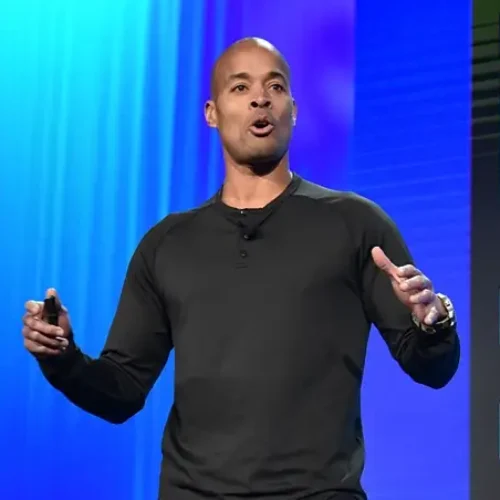
David Goggins

David Goggins

David Goggins is an American ultra-endurance athlete, author, and motivational speaker known for his extreme physical and mental challenges.

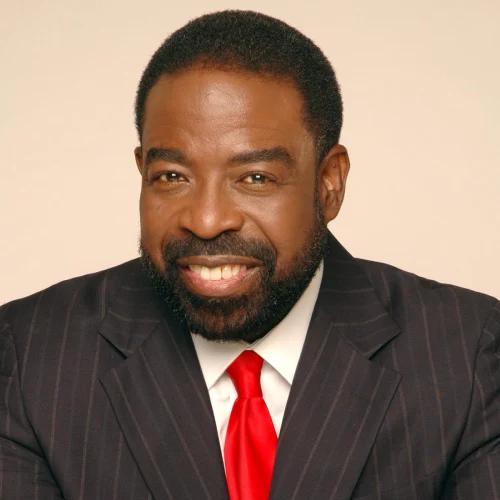
Leslie Calvin Brown

Les Brown

A world-renowned motivational speaker, author, and former politician who empowers individuals to pursue their dreams with unwavering determination.

Amy Purdy

Amy Purdy

Paralympic medalist, motivational speaker, author, and co-founder of Adaptive Action Sports, inspiring resilience and challenging perceived limitations.

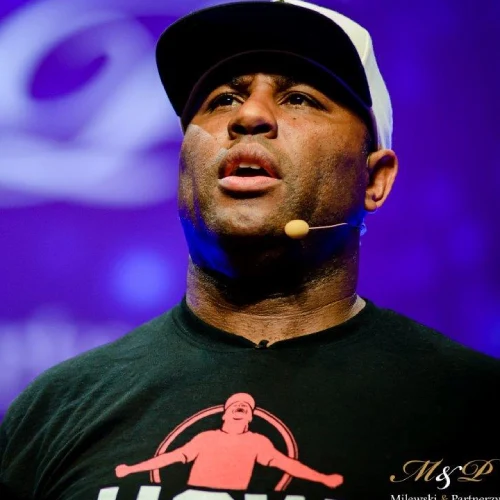
Eric Thomas

Eric Thomas

A motivational speaker, author, and educator whose raw, passionate delivery inspires millions to pursue greatness relentlessly.

Related Reads

Apply to be Featured

All applications undergo an impact and credibility review. We will reach out if your profile meets our featuring criteria.